
Optolab provides a software-solution designed to be used by qualified Optometrists to carry out a range of vision tests in your practice or for on-location mass testing in schools or workplaces. The tests include a Colour Vision test, Binocular Function Test and Refractive Error Predictor. All 3 tests can be conducted in less than 6 minutes per child.
This new and unique technology has been awarded a CE mark and enables local Optometrists to make a profound impact in their community by screening thousands of children annually and engaging with their families to enhance their lives through improved vision, and aligned with best practices.
Optolab's software has been rigorously tested in real-world conditions for over six years. Each test is designed to provide reliable results, suitable for supporting professional optometric decision-making.
Detects red-green colour vision deficiency (affects 8% of males, 0.5% of females)


The test demonstrated high accuracy, evidenced by a strong correlation with the Ishihara test (r = 0.989).
It also showed excellent test–retest reliability (r = 0.980) and outstanding inter-rater reliability, with an average intraclass correlation coefficient (ICC) of 0.976.
Over 2000 tests conducted on children (from age 4) and adults
Detailed research reports available on request
Detects blur due to refractive error, including myopia and hyperopia
Myopia: Measurements showed strong agreement with conventional distance visual acuity charts (r = -0.86, -0.87).
Hyperopia: Measurements demonstrated higher reliability than standard distance charts (r = -0.75, 0.45), particularly for low to moderate hyperopia in patients under 40 years.
Over 1,000 tests conducted on patients from age 6
Detailed research reports available on request
Purpose: Assesses central suppression and ocular misalignment
Compared with established gold standard methods for assessing ocular suppression and misalignment, independent statistical analysis of the iLert Binocular Function Test demonstrated a sensitivity of 83.3% and a specificity of 100%, with a concordance correlation coefficient (CCC) of 0.97, indicating excellent agreement. No adverse events were observed during testing.
Over 1,000 tests conducted on patients from age 6
Detailed research reports available on request
The software is licensed on a subscription basis with an additional charge for extra test credits:
Engaging your community
Providing a public health service
Identifying eye problems quickly
Growing your practice through brand recognition
Optolab can share real-world case studies illustrating the business logic of this model on a confidential basis.
Tests may be conducted by a trained assistant under the supervision of a qualified eye care professional. The software is intended to record, store, organise, and display test data obtained during the assessment. It does not perform automated diagnosis or make clinical decisions.
Test results are presented in real time on the Optolab dashboard to support review by a qualified eye care professional, who remains solely responsible for interpretation of the results and determination of any necessary follow-up actions.
The device is intended for professional use and is classified as a Class I medical device in accordance with Regulation (EU) 2017/745 (EU MDR), complying with applicable General Safety and Performance Requirements (Annex I).

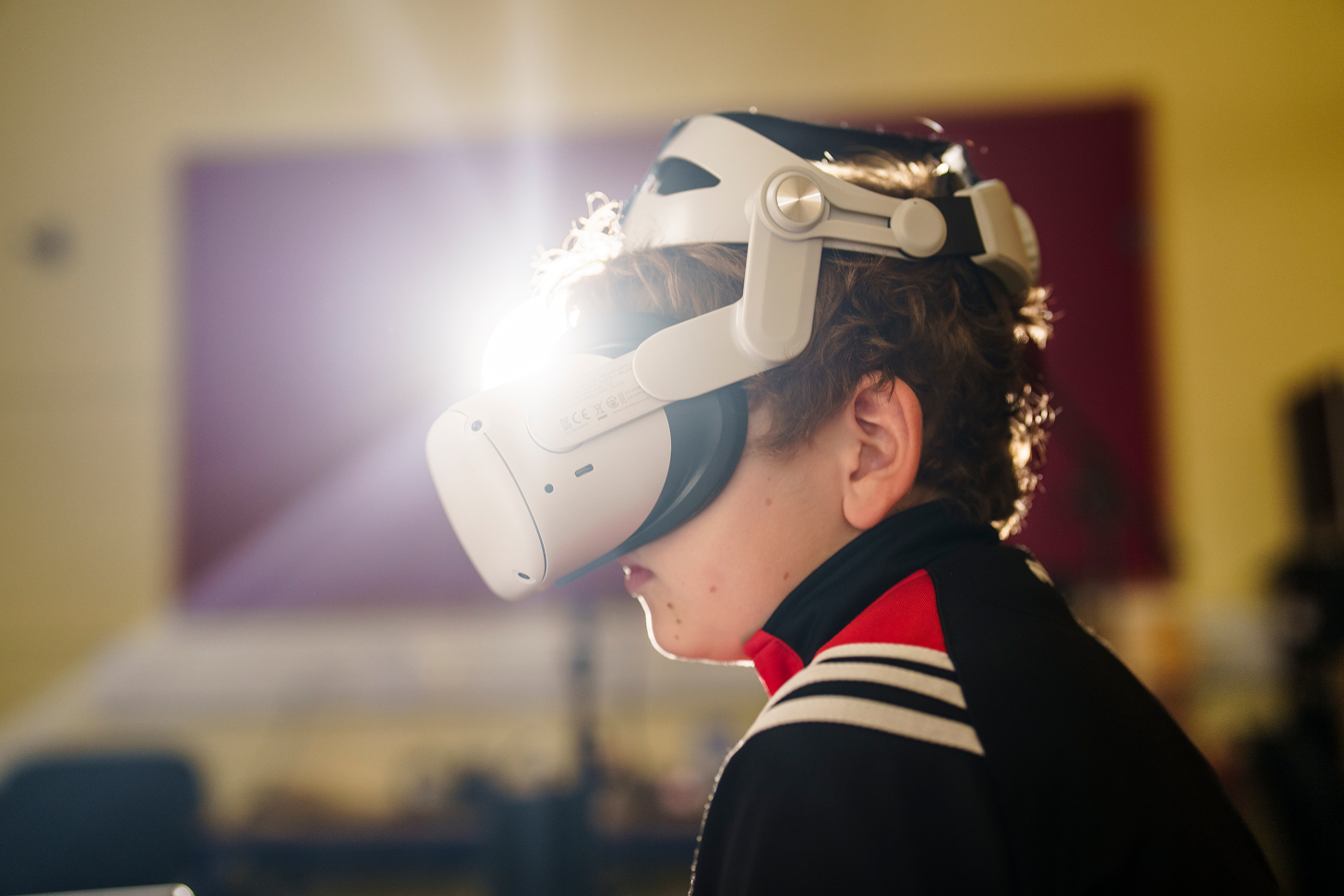
Using a VR headset allows for an immersive, controlled environment that standardises light levels and testing distances.
This enables multiple aspects of vision to be assessed and recorded efficiently in just a few minutes, unlike traditional methods.
Optolab enables your practice to send personalised reports featuring your own branding, with test results delivered directly to parents via automated email. Emails can be fully customised and distributed in bulk, with the option to include vouchers or additional informational documents. For children who require further examination, as determined by the optometrist, parents can be provided with a convenient booking link within the email, allowing them to schedule an appointment easily through your practice's online booking system.
Optolab provides ready-to-use digital brochures, posters, and advertising templates to help you inform local schools, sports clubs, and businesses about your initiative. Assign a staff member to manage these communications. Our team can provide guidance on effective outreach strategies and expected responses.


Contact Optolab to schedule an initial Zoom meeting with an experienced professional. Learn how the model works and register for access to our confidential Optician Information Service.
Book an Optician briefing