
%201.png)
Undetected vision problems can have a significant impact on a child's learning, concentration, confidence, and participation in sport. While it is often assumed that eyesight issues are easy to spot, many visual difficulties go unnoticed—particularly those linked to sustained focus, unequal effort between the eyes, or subtle coordination problems. Some children, for example, may strain to maintain clear vision in the classroom. Others may struggle with reading fluency or copying from the board without understanding why it feels more difficult for them than for their peers. Over time, these challenges can affect both academic progress and self-confidence.
Approximately one in 12 boys and one in 200 girls experience difficulty distinguishing certain shades of red and green. This can make interpreting maps, charts, graphs, and other colour-coded learning materials more challenging. Because colour vision deficiencies are not always routinely tested, they are often discovered later in life. Early identification enables schools and parents to make simple adjustments that better support a child's learning experience.


Optolab partners with a network of qualified local opticians to deliver convenient, on-site vision screening within schools. After a school registers its interest, a suitable testing date is arranged. Parents are then contacted by email and invited to provide consent for their child to participate. On a typical testing day, 100 or more pupils can be screened efficiently and with minimal disruption to the school timetable. There is no obligation for parents or schools to proceed beyond the initial screening. As Optolab continues to expand its partner network, availability may vary by region.
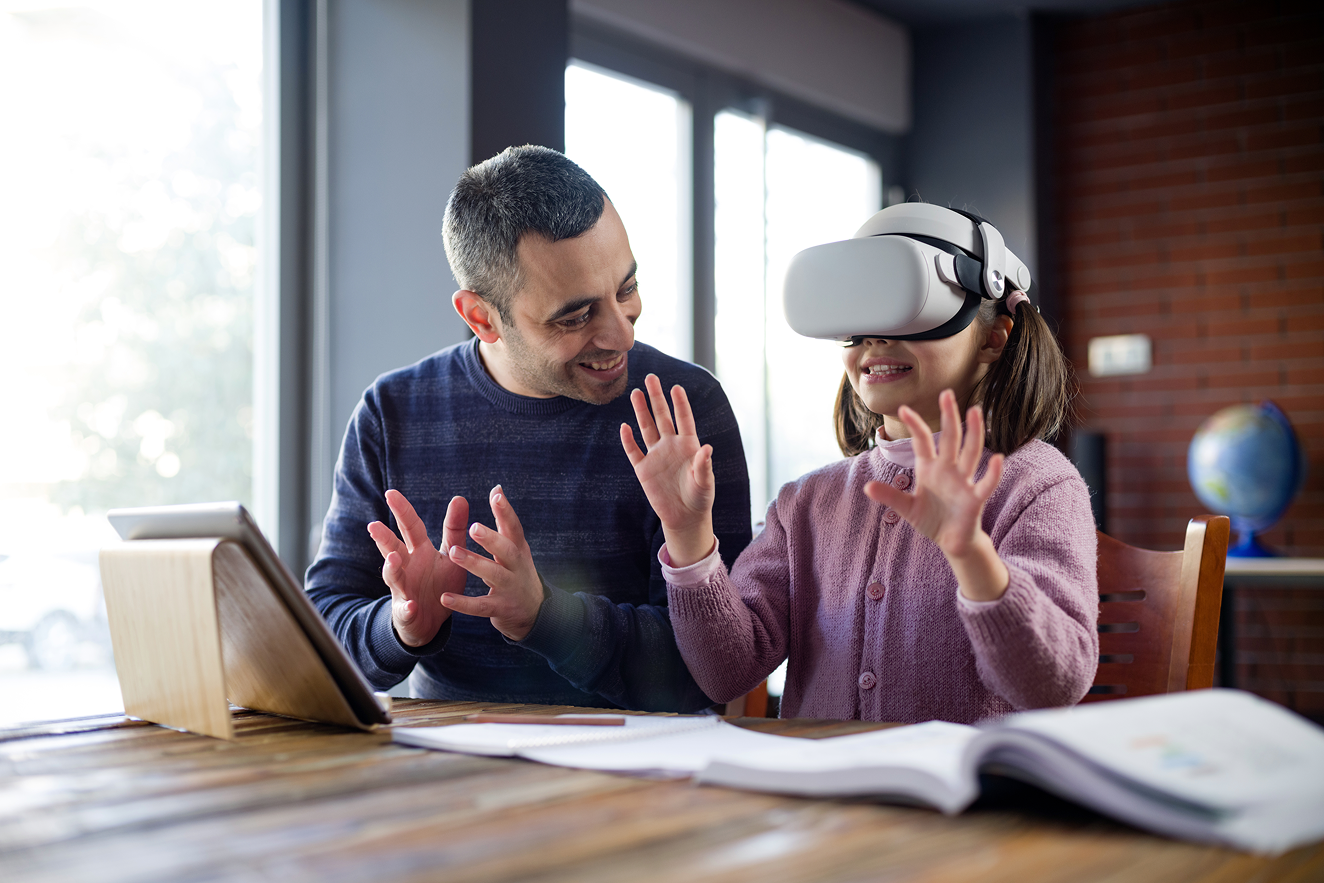
With parental consent, pupils complete a brief vision screening using Meta virtual reality (VR) goggles and Optolab's proprietary iLert software. During the assessment, children are asked to identify a series of visual targets displayed within the headset. The screening takes approximately six minutes per child. It is entirely non-invasive, comfortable, and age-appropriate. In some cases, a traditional letter chart may be used to confirm findings. An optician's assistant conducts the test, and a school staff member or chaperone is present at all times.
Virtual reality technology creates a carefully controlled visual environment by managing light levels and perceived viewing distance. Unlike traditional wall charts alone, VR screening enables multiple aspects of vision to be assessed quickly, consistently, and efficiently. This makes it particularly well suited to busy school settings.
Costs vary depending on the individual Optolab partner's business model. In many cases, school screenings are provided at no cost to parents. Where follow-up care is recommended, this may involve a charge, often offered at a discounted rate. All potential costs are clearly communicated to parents in advance.
Parents receive their child's screening results by email within five working days. In most cases, no further action is required. If a more detailed assessment is recommended, parents will receive an invitation to book a face-to-face appointment with the local Optolab partner optician.
Optolab and its partners adhere to strict professional and data protection standards. Individual results are shared only with parents or guardians and are never discussed with the school. Schools receive an anonymised summary report outlining the number of pupils screened and the percentage identified as potentially requiring further assessment.